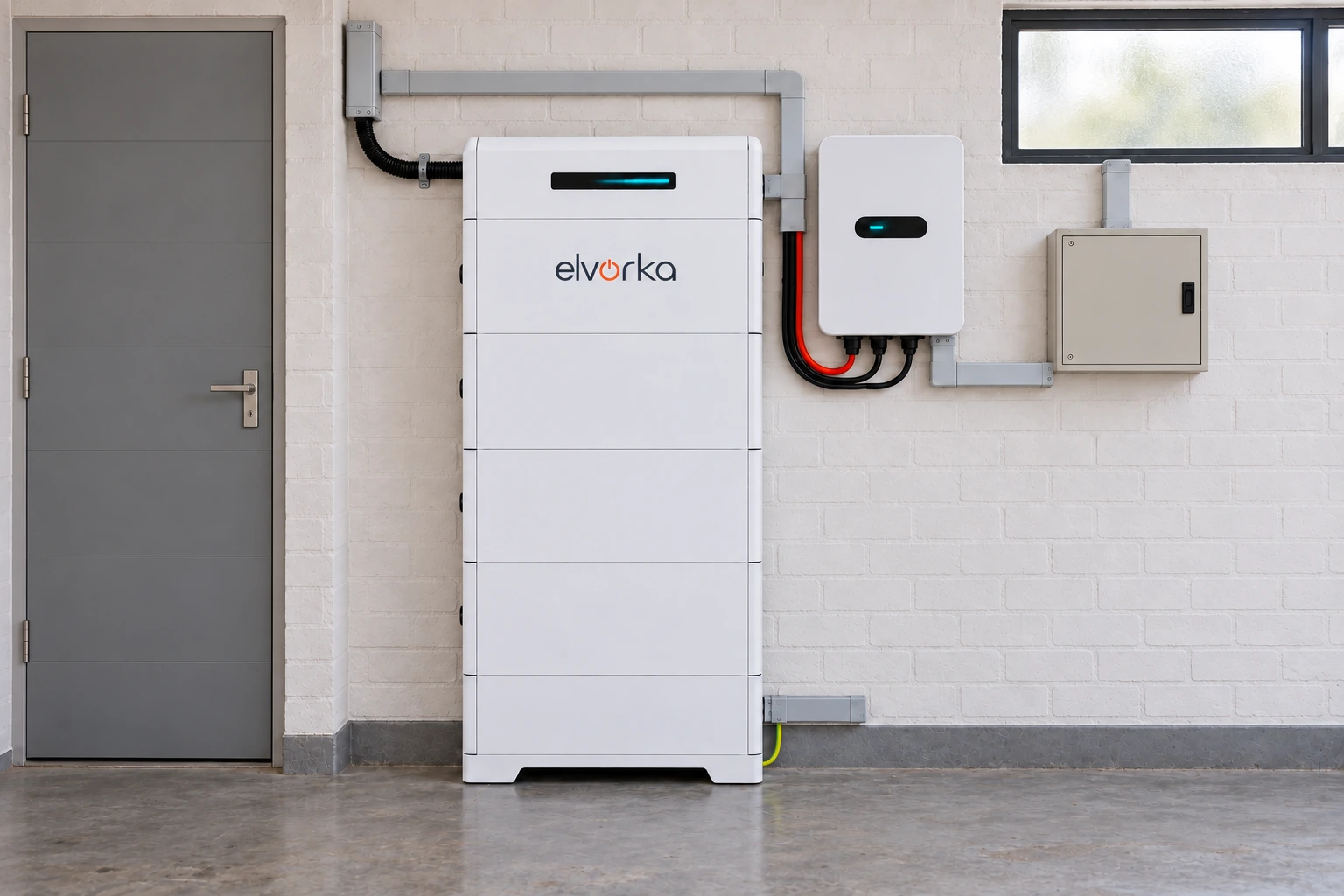
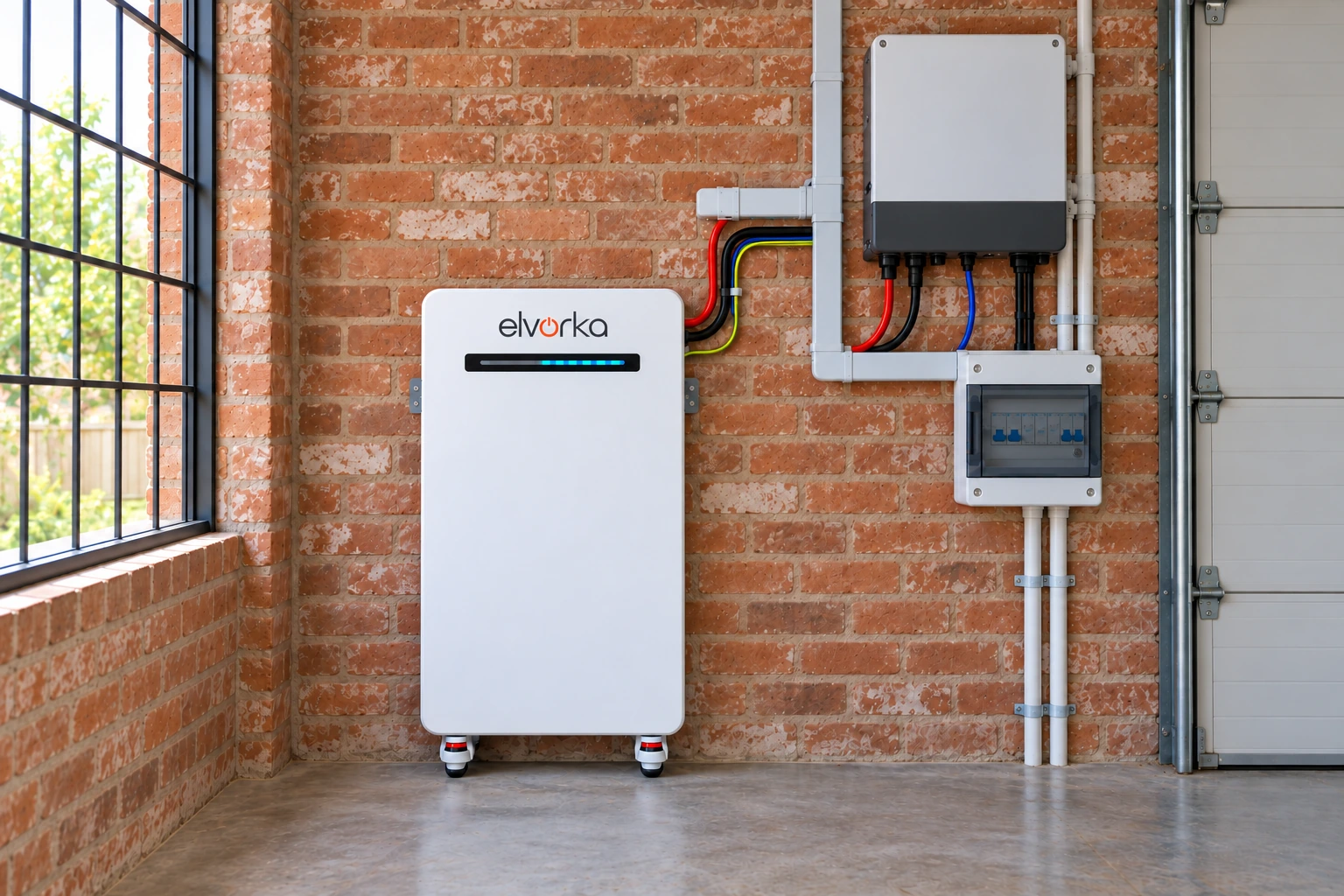
A battery is easier to size when the question is specific: which appliances should keep running, and for how long? A list of selected circuits is more useful than a promise of whole-home backup. Use the local examples below as a starting worksheet, then replace every assumption with appliance or installer data.
kWh and kW answer different questions
Energy in kWh describes the amount stored. Power in kW describes how quickly energy is delivered. A larger battery does not automatically provide a higher AC output. Battery-side DC ratings, inverter AC output, starting demand and the backup-circuit arrangement must all support the intended loads.
A local load worksheet
Connectivity and home-office essentials
- Selected LED lighting — 60 W
- Fibre ONT and router — 40 W
- Laptop — 100 W
Selected household essentials
- Selected lighting — 80 W
- Refrigeration, illustrative cycling average — 180 W
- Fibre ONT and router — 40 W
- Television — 100 W
Broader essential circuits
- Selected lighting — 100 W
- Refrigeration, illustrative cycling average — 200 W
- Fibre ONT and router — 40 W
- Computers and displays — 160 W
- Freezer, illustrative cycling average — 200 W
- Selected ventilation — 100 W
An indicative runtime, with assumptions visible
For comparison only: runtime in hours = nominal battery energy × assumed usable fraction × assumed conversion efficiency ÷ average load in kW. The example uses 90% usable energy and 90% conversion efficiency as planning assumptions, not product guarantees. Actual runtime also depends on reserve settings, temperature, ageing, standby consumption, duty cycles and the selected inverter.
Illustrative TR6000WX-Pro example
| Assumed load (W) | Indicative runtime (h) |
|---|---|
| 200 | 41.5 |
| 400 | 20.7 |
| 800 | 10.4 |
10.24 kWh nominal energy; assumptions 0.90 × 0.90. This is a calculation, not a tested local household result.
Choose the architecture before the capacity
EU 230 V and TA6000 are integrated battery-and-inverter families. A second standalone inverter is not part of their basic product architecture. TR Pro, TR standard, HP Ultra, HP K and TB are batteries that need a compatible external inverter. Match voltage range, current limits, communication protocol and firmware; nominal voltage alone does not establish compatibility.
Use the backup explorer for a first comparison, then send the selected loads, required duration and existing inverter details with your enquiry. Electrical design and final compatibility need to be confirmed for the actual project.
Questions for your installer
Can a battery charge during a freezing inland winter night?
Do not assume it can. Several supplied families list charging from 0 °C even where their discharge limit is lower. Confirm the actual room and battery temperature, protection behaviour and any explicitly supported heating configuration for the selected SKU.
Should I size the battery around a particular outage schedule?
Use the backup duration and essential loads you want to plan for. The examples make no claim about current load-shedding stages or schedules; actual runtime depends on usable energy, battery condition, temperature, inverter use and load changes.
Can the essential-load presets include a geyser or space heater?
Those loads are excluded. Supply their actual power rating and operating duration for a separate design review. More kWh can increase planned duration, but it does not by itself increase the inverter's kW output or starting-load capability.